As the global economic order fractures, scholars gather in Istanbul to rethink international law
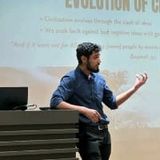
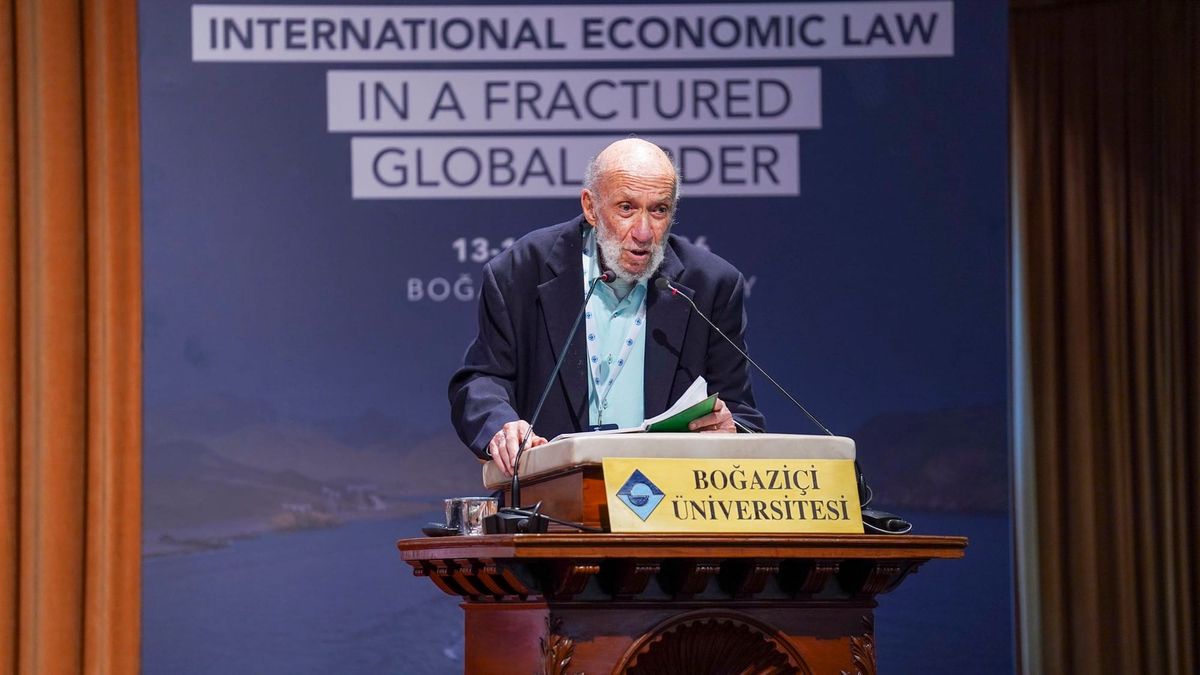
Legal scholars from across the world converged on Istanbul last week to debate a question with consequences far beyond academia: can international law still deliver justice in a world defined by trade wars, sanctions and geopolitical rivalry?
The third Boğaziçi International Law Conference (BILC 2026), held on 13–14 June at Boğaziçi University overlooking the Bosphorus, brought together academics from Asia, Africa, the Middle East, Europe and North America under the theme "International Economic Law in a Fractured Global Order."
Having attended the conference personally, what distinguished BILC from comparable gatherings was the willingness of participants to challenge assumptions that mainstream international law conferences rarely question, among them, whether the institutions governing global trade and investment serve all countries equally, or whether they continue to reproduce older hierarchies under new names.
From Gaza to Global Economics
The conference's intellectual journey itself tells an important story.
The inaugural BILC in 2024 took place under the theme "Rethinking International Law After Gaza." At a time when much of the world watched the destruction unfolding in Gaza, scholars gathered to critically examine how international law had responded—or failed to respond—to one of the defining moral and legal crises of our age.
The discussions resonated far beyond the conference halls. Selected papers were later published by Opinio Juris, one of the world's leading international law platforms, while participants issued a declaration calling for renewed engagement with questions of justice, accountability and decolonisation.
The following year, BILC turned its attention to "Justice and Reconstruction in Post-Conflict Societies." Scholars explored how countries emerging from conflict navigate rebuilding institutions, economies and social cohesion. Case studies ranging from Syria and Afghanistan to Ukraine and Palestine examined whether international legal frameworks genuinely support reconstruction or merely reinforce existing power structures.
This year's conference represented the next stage in that intellectual progression.
If Gaza forced scholars to question the legitimacy of international law, and post-conflict reconstruction raised questions about justice, then the logical next question became: what about the economic system underpinning the entire global order?
A World in Transition
Throughout the conference, one theme repeatedly emerged. The world is changing.
The institutions that defined international economic relations for decades—from free trade agreements to investment treaties and multilateral organisations—are facing unprecedented strain.
Professor Muthucumaraswamy Sornarajah of the National University of Singapore argued that fragmentation is no longer a future possibility but a present reality. According to him, the era of neoliberal globalisation that once promised greater economic integration is increasingly giving way to competing centres of power.
The World Trade Organisation, once envisioned as the cornerstone of global trade governance, has struggled to maintain its authority amid growing geopolitical tensions. Meanwhile, countries are increasingly invoking national security, environmental protection and human rights concerns to justify policies that would previously have been challenged under traditional economic rules.
In simpler terms, the assumption that economics could remain separate from politics is rapidly disappearing.
Economic relations are becoming political once again.
The Battle of Ideas in the Age of Artificial Intelligence
One of the conference's most fascinating discussions came from Professor Gregory Shaffer of Georgetown Law School.
While many debates focused on trade, investment and geopolitics, Shaffer turned attention towards a less obvious actor: artificial intelligence.
As millions increasingly rely on large language models and AI systems to understand world affairs, he argued that these technologies are not neutral.
The way AI explains trade disputes, sanctions, economic competition or international conflicts often reflects underlying assumptions embedded within the data used to train them.
If an AI repeatedly presents one interpretation of world events as objective fact while marginalising alternative explanations, it can shape how entire societies understand international affairs.
The implication is profound.
The struggle over the future of international law is no longer confined to courtrooms, universities or diplomatic negotiations. It increasingly extends into digital spaces where information itself is produced and consumed.
Is Globalisation Ending?
Professor Jane Kelsey of the University of Auckland offered perhaps one of the conference's most provocative arguments.
For decades, the dominant narrative suggested that globalisation would bring prosperity, peace and development for all. Yet growing inequality, environmental crises, financial instability and geopolitical tensions have challenged that promise.
Kelsey argued that what many once viewed as a stable rules-based order may have been far more fragile than its advocates assumed.
As trade disputes intensify and major powers increasingly prioritise strategic interests over multilateral cooperation, the global economic system appears less like a harmonious international community and more like a contested arena of competing interests.
Her analysis raised a difficult question:
If the existing model is failing, what comes next?
When Law Serves Power
Perhaps no presentation illustrated the intersection of law and geopolitics more vividly than that of Professor Mohsen Al-Attar.
Examining a dispute over Venezuelan gold reserves held by the Bank of England, Al-Attar argued that legal decisions cannot always be separated from questions of political power.
His broader argument was that international economic law often carries colonial legacies that remain insufficiently acknowledged.
Whether one agrees with every aspect of his analysis or not, the presentation reflected a recurring theme throughout the conference: many scholars from the Global South are increasingly questioning legal doctrines that have long been treated as universal and politically neutral.
Their challenge is not merely technical.
It is civilisational.
Who creates international legal norms?
Whose interests do they serve?
And whose voices have historically been excluded from the conversation?
Beyond the West
One of the conference's greatest strengths was precisely its diversity of perspectives.
While international law has traditionally been dominated by institutions and scholars from Europe and North America, BILC provided a platform for voices from Asia, Africa, the Middle East and the wider Global South.
This diversity was not symbolic.
It shaped the substance of the discussions.
Questions of development, sovereignty, economic dependency, climate justice and post-colonial power relations occupied a central place throughout the conference.
In many ways, BILC reflects a broader transformation occurring within international legal scholarship itself. As power gradually shifts towards a more multipolar world, scholars from previously marginalised regions are increasingly demanding a seat at the table.
Not merely as participants.
But as contributors shaping the future of international law.
Building an Intellectual Hub in Istanbul
Behind the conference stands the sustained effort of Dr Hasan Basri Bülbül, Assistant Professor at Boğaziçi University's Faculty of Law.
Over the past three years, Bülbül and his colleagues have successfully transformed what began as a conference into an emerging intellectual platform attracting some of the most respected scholars in the field.
Yet perhaps the conference's most significant contribution lies beyond the presentations themselves.
For students and early-career researchers, BILC offers something increasingly rare: direct access to leading scholars, opportunities for mentorship, and exposure to cutting-edge debates shaping the future of international law.
Throughout the conference, students could be seen engaging with professors whose books they had previously only encountered in classrooms and libraries. Informal conversations in hallways often proved as valuable as the formal panels themselves.
In a field where networking and intellectual exchange are essential, such opportunities can be transformative.
Looking Forward
As participants departed Boğaziçi University overlooking the waters of the Bosphorus, the questions raised over the two-day conference remained unresolved.
The future of international economic law is uncertain.
The institutions governing global trade and investment face growing pressures.
New powers are emerging.
Old assumptions are being challenged.
And debates once confined to academic circles increasingly shape the realities of everyday life—from the prices people pay for goods to the technologies they use and the conflicts that define international politics.
What BILC demonstrated is that these questions are too important to be left to policymakers alone.
They require critical reflection, intellectual courage and a willingness to challenge inherited orthodoxies.
At a time when much of the world appears fragmented, conferences like BILC remind us that meaningful dialogue remains possible—and that the search for a more just international order is far from over.