How Syed Peer built Nikah.com, the internet's first Muslim matrimony platform
Years before "halal tech" became a buzzword, a small website called Nikah.com quietly became the first dedicated matchmaking platform for Muslims anywhere on the internet.

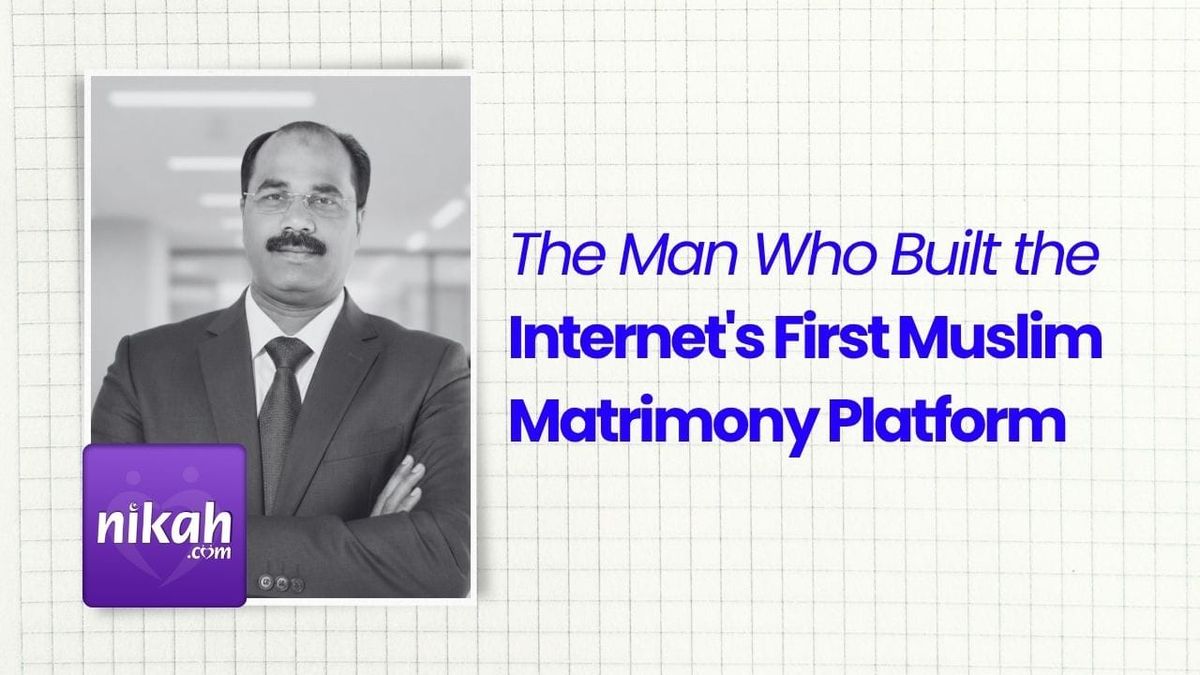
In 2000, the internet had no home for Muslim marriage. Platforms like Match.com existed, but they were not designed with Muslim users in mind. The values, modesty, family involvement, and faith-centred approach that shape the Muslim marriage process were absent from online matchmaking. For Muslims looking for a spouse, the digital world offered plenty of dating sites, but no option that reflected their beliefs and expectations.
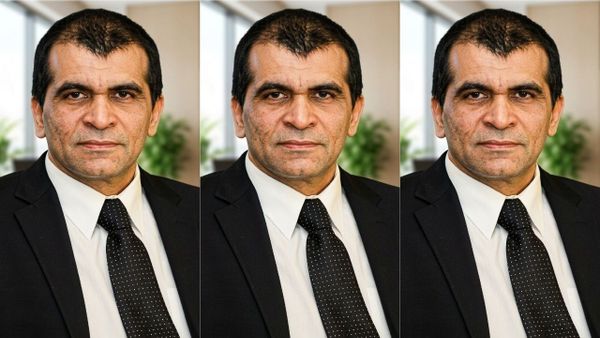
That's when Syed Peer, an Indian working for an IT company in Dubai, launched NikahSearch.com, later rebranded as Nikah.com.
Long before mobile apps and algorithm-driven matchmaking became the norm, Nikah.com was attempting to recreate the Muslim marriage process online while preserving privacy, family involvement, and religious boundaries. Its business model reflected the same philosophy. Browsing and messaging were free, but users paid to exchange direct contact details. The system, which Peer later described as a "halal freemium" model, lowered barriers to entry while creating an incentive for genuine matrimonial intent rather than casual interaction.
The Idea That Started It All
Syed Peer grew up in Chennai and started working young. From the sixth standard onwards, he was already displaying the entrepreneurial drive that would later define his career, taking on a succession of small ventures. His formal education ended after the tenth standard, after which he enrolled at an Industrial Training Institute and completed a course in office management and stenography.
The certificate opened the door to his first corporate job in Chennai. A promotion followed, and with it a transfer to Dubai, where he took up a role as an administrative officer.
In 1998, Peer helped a family in Mumbai find a match for their daughter, a process that, without any dedicated platform, took far longer than it should have. Around the same time, while testing a general matchmaking site, he paid twenty dollars to register — roughly nine hundred rupees at the time, enough to buy a hundred kilograms of rice.
He immediately called his bank to cancel the transaction. The money, he was told, had already left his account in Dubai and reached a bank in London.
"Two seconds," Peer recalled. "I could send money to a stranger in London in two seconds. But when I sent money to my mother in India through a demand draft, it took twenty-five days."
That contrast stayed with him. "That's when I realised where technology was heading," he said. "And I realised that our community had no real presence in that future."
Building Nikah.com from Almost Nothing
In 2000, convinced that Muslims needed a matrimonial platform of their own, Syed Peer registered NikahSearch.com for thirty-five dollars and set out to build it. He saved two months of salary to buy a secondhand computer, handed it to a friend who knew how to code, and made weekly trips to Sharjah to sit beside him as the website took shape.
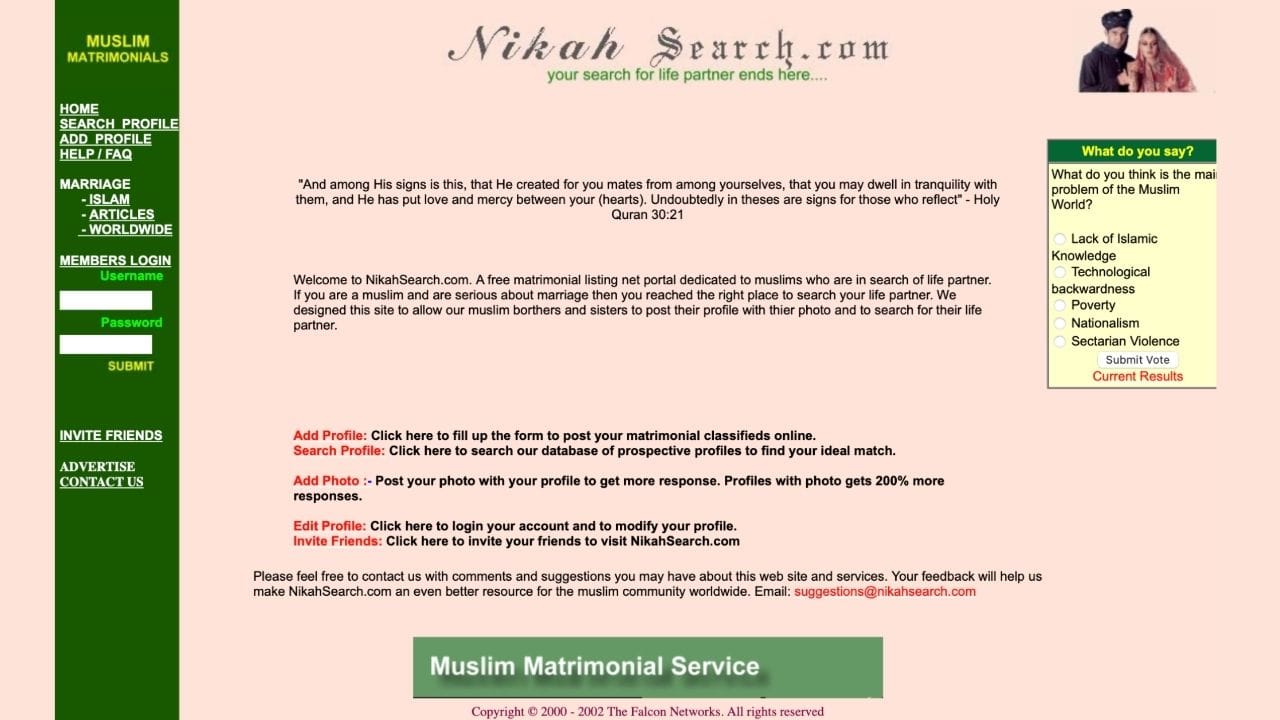
When the site finally went live, the response was immediate. Without Google, without social media, and simply by being listed on early web directories such as Yahoo and Netscape, new profiles began pouring in. Demand grew so quickly that servers had to be restarted repeatedly just to keep the platform running.
Peer was still holding his day job. Every night after dinner, he and a friend would sit down to approve profiles, screen messages, and strip out contact details that users tried to slip past the system, sometimes processing as many as ten thousand messages in a single day.
The site's earliest archived success stories, preserved on the Internet Archive from as far back as 2001, capture exactly what kept him going. A woman in the United Kingdom wrote in to say she had found her husband through the platform and asked for her profile to be removed. A man in the United States thanked the platform for helping him find, in his words, an honest and well-educated Muslim brother who follows the sunnah. A woman in Singapore wrote that she and her fiance had decided to marry within days of Ramadan, and thanked the site for bringing them together with Allah's permission. One of the stories that stayed with Peer the longest came from a woman in a small German village with no mosque and no Muslim community nearby, who had quietly taken her Shahada and found a match through the platform, writing that she was counting the days until she could finally tell the world she was Muslim.
"That kind of letter made me cry," Syed says. "It made everything meaningful."
Not every response was kind. Some accused him of misguiding the community. Others were outraged by the very idea of women's matrimonial profiles appearing online. The criticism could be relentless, and at times deeply personal.
"There were nights I cried," Syed recalls. "But I knew what we were doing was helping people." So he kept going.
Becoming Nikah.com
By 2003, Syed had come to believe that the platform needed a simpler, more powerful identity if it was to reach Muslims around the world. One domain stood above all others: nikah.com.
The problem was that it already belonged to someone else.
For Syed, it was an enormous sum. He pieced the money together from savings, help from relatives, and what remained of his gratuity after years of spending on servers, telephone bills, and dial-up internet access. But he believed the domain was worth the sacrifice. A website called NikahSearch.com helped people find it. A website called Nikah.com would be impossible to forget.
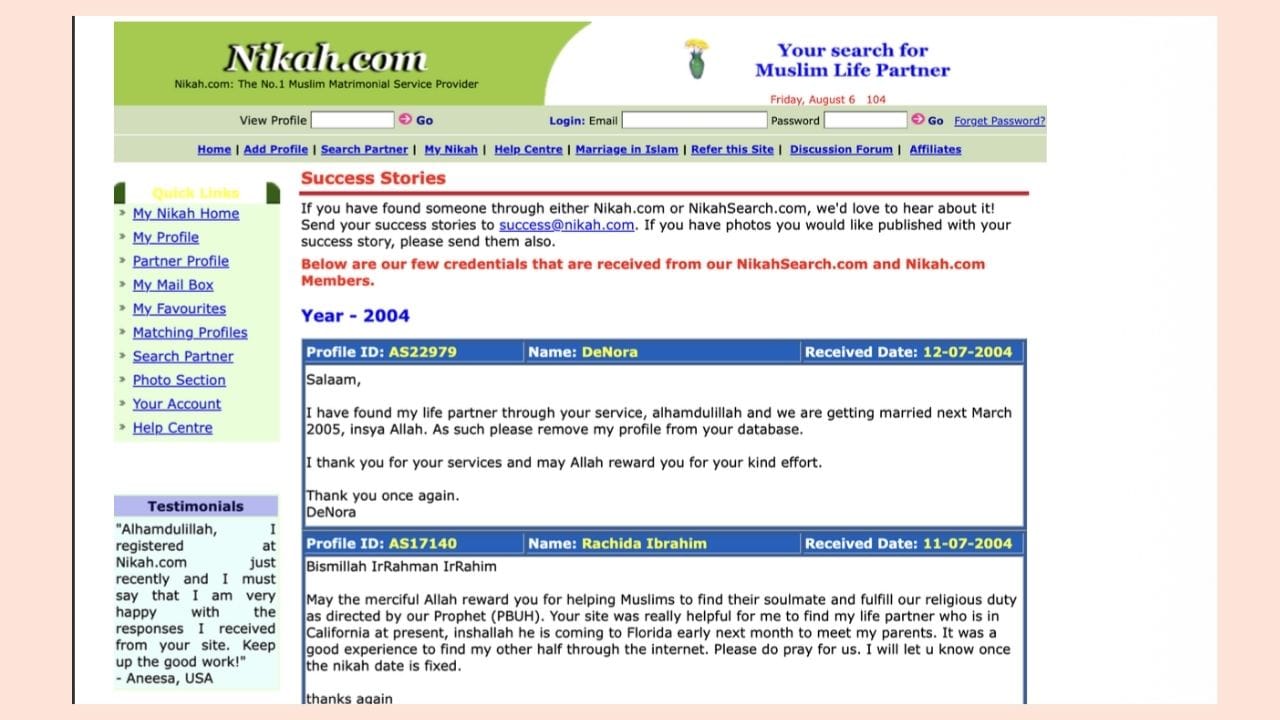
By 2004, Nikah.com had fully replaced NikahSearch.com as the platform's identity. That same year, the site introduced features that were unusually advanced for the era: Photo Lock, which allowed users to hide their pictures and grant access only to selected individuals; Anonymous Contact, which enabled communication without immediately revealing personal details; and e-Nikah Maker, a tool designed to help formalise the marriage process itself. Together, they reflected an early effort to balance technology with privacy, modesty, and religious sensibilities in online matchmaking.
Syed resigned from his job to run the platform full time, moved back to India, and arrived with four thousand rupees in his pocket, twenty five hundred of which went straight to the taxi driver. He built one office, then expanded to fourteen across India, from Madurai to Chennai, Hyderabad to Bhopal. He launched Nikah Pages, a monthly print magazine carrying profile listings that drove readers back to the website. By 2010, the platform had moved into television promotions, appearing on programmes and running its own Nikah.com Centre events to bring the same matchmaking process into physical, face to face spaces.
When a venture capital firm later asked him to monetise the photo lock feature for women specifically, he walked out of the meeting and never went back. "If I go to venture capital, I cannot align with Islamic things," he says. "Technology must adapt to Islamic values. Islamic values should never be compromised to suit technology." He has since turned down acquisition offers, including one that reached into the millions for the domain alone. For Syed, Nikah.com was never simply a business to be sold. "The benefit should come to me even in my Akhira," he says. "I should be a part of it."
A Pioneer Still Standing
Since 2000, more than three million Muslims across over a hundred countries have used Nikah.com. The Android app alone is nearing one million installs. Visitors still arrive organically every day from Indonesia, Bangladesh, Egypt, Morocco, Canada, Saudi Arabia and beyond, drawn by nothing more than the weight the name itself carries.
The matrimony space looks nothing like it did in 2000. Many platforms have since entered the market, several with far greater funding, larger teams, and significantly bigger user bases. Syed is candid about the technology gap this has created for Nikah.com over the years. But the platform he built before any of them existed is still standing, and he remains confident in what the name represents. He is now actively exploring venture funding for the first time in the platform's history, determined to rebuild Nikah.com for what he calls its next phase: family-circle features that bring mothers, siblings and close friends into the matchmaking process together, AI-assisted moderation to preserve trust at scale, and pre-marriage support built directly into the platform to address rising divorce rates he has been studying through his own network of offices for over a decade.
"A successful marriage isn't just about finding the right person," he says. "It's about building a resilient bond and having the right support to protect it."
Twenty-five years ago, a young man from Chennai sat alone in a Dubai office at three in the morning, teaching himself from software manuals and help files, convinced that technology could do more than entertain or enrich. It could solve problems for his community.
What emerged from that conviction was Nikah.com, a platform that would help shape the way Muslims around the world searched for a spouse online.
A quarter of a century later, after millions of users, countless marriages, and more than a few setbacks along the way, Syed Peer still speaks about the future more than the past.
"Insha'Allah," he says, "this is only the beginning."